HTTrack Alternative 2026: Why You Need a Modern Website Downloader
HTTrack Website Copier was the gold standard for downloading websites. Released in 1998 and last significantly updated in 2006, it served millions of users who needed offline copies of websites. But the web of 2006 and the web of 2026 are fundamentally different.
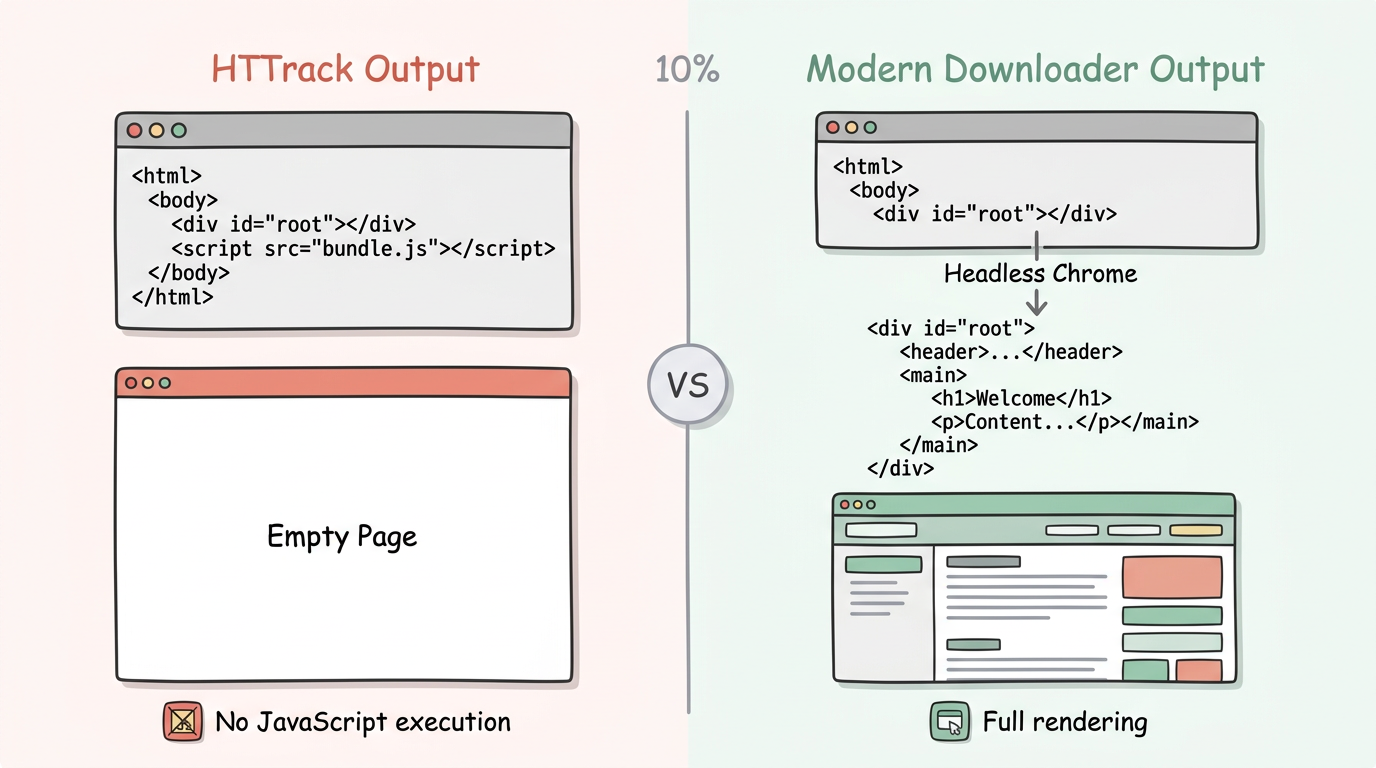
Today, over 80% of new websites are built with JavaScript frameworks like React, Next.js, Vue, and Angular. These frameworks render content in the browser — the HTML sent from the server is often just an empty shell with a <div id="root"></div> tag. HTTrack downloads this empty shell, because it has no way to execute JavaScript.
The Core Problem
When you use HTTrack to download a React website, you get a blank page. The HTML file contains only the JavaScript bundle reference, not the actual rendered content. This is because React (and similar frameworks) build the DOM dynamically in the browser — something HTTrack was never designed to handle.
The Modern Solution
websitedownloader.org uses headless Chrome — the same browser engine you use to browse the web — to render pages before downloading. This means:
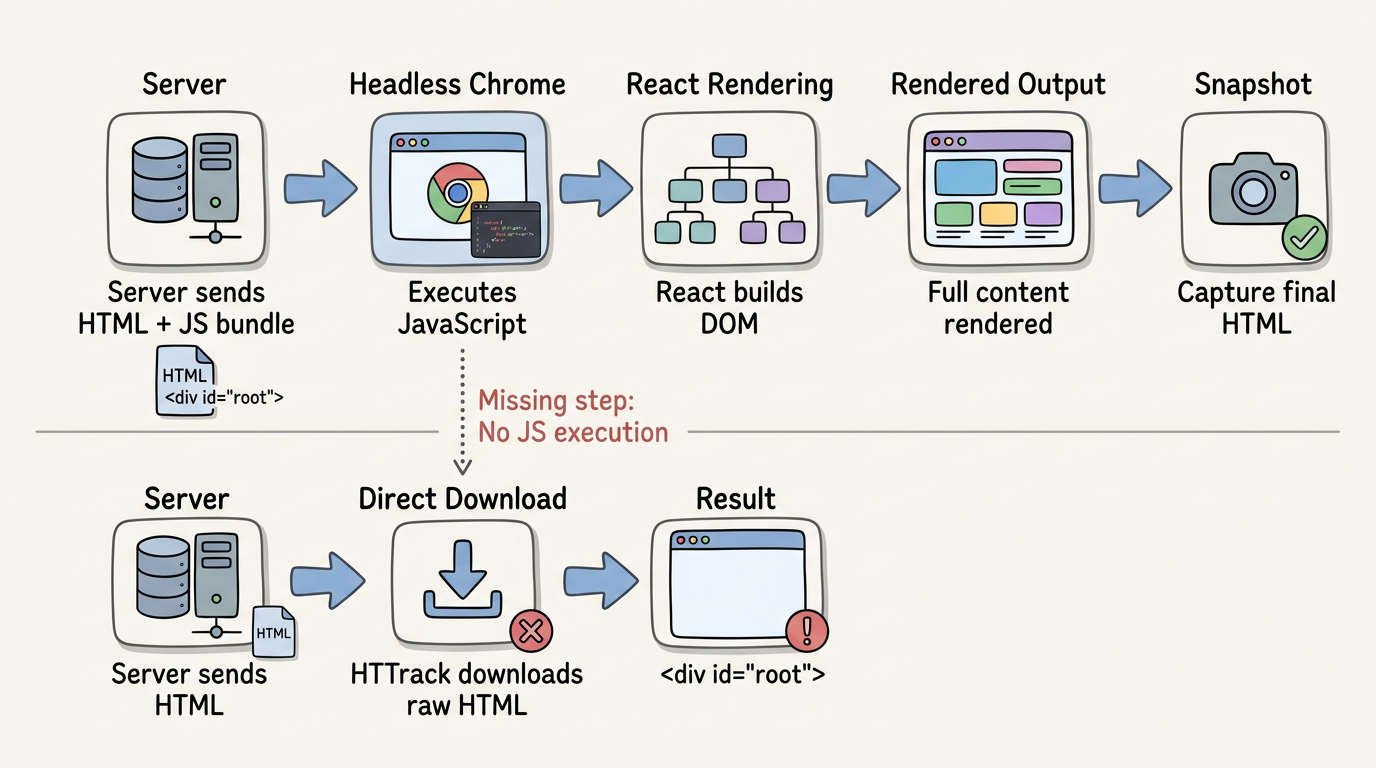- JavaScript is fully executed before capture
- React, Vue, Angular, Svelte all work out of the box
- Dynamic content, lazy-loaded images, and client-side routing are all captured
- No installation — everything runs in the cloud
Other HTTrack Pain Points We Fix
Beyond JavaScript support, HTTrack has several other issues that make it impractical in 2026:
- macOS installation — HTTrack requires compilation from source on modern Macs, which is error-prone.
- No SPA support — Single-page applications with client-side routing confuse HTTrack's crawler.
- Broken CSS — Modern CSS features like CSS Grid, custom properties, and container queries often break in HTTrack's output.
- No cloud processing — HTTrack runs on your machine, consuming your bandwidth and CPU.
Related Guides
- Web downloader comparison — 8 tools tested with hands-on results.
- How to download a website — 5 free methods step by step.
- Best website downloaders 2026 — Full comparison of every tool.